

Questions We Answer
- What is OCD?
- What causes OCD?
- What are the signs and symptoms of OCD?
- How is OCD diagnosed?
- What techniques do we use to treat OCD?
- Do we use Exposure and Response Prevention (ERP) to treat OCD?
- Do we include family in treatment?
- How is Eden Behavioral Health unique in treating child OCD?
What is OCD? Understand how obsessions and compulsions manifest in children and their impact on daily life.
What causes OCD? Learn about the genetic, biological, and environmental factors that contribute to OCD.
Signs and symptoms of OCD: Discover the behaviors and patterns that may indicate a child is experiencing OCD.
How is OCD diagnosed? Explore how mental health professionals assess OCD in children, including diagnostic tools like the CY-BOCS.
How is OCD treated? Learn about evidence-based treatments such as CBT and ERP, and how these approaches help children face their fears.
Family involvement in treatment: Understand the importance of family in supporting a child’s progress and how Eden Behavioral Health works with parents.
What makes Eden Behavioral Health unique? Find out how our personalized care, family-centered approach, and expertise in ERP set us apart.
Obsessive-Compulsive Disorder (OCD) in children is a mental health condition characterized by distressing
obsessions—unwanted thoughts or fears—and compulsions, which are repetitive actions or mental rituals performed to
ease anxiety. These behaviors can interfere with daily life, but with the right treatment, children can regain
control and thrive.
At Eden Behavioral Health, we specialize in treating pediatric OCD using Cognitive Behavioral Therapy
(CBT) with a focus on Exposure and Response Prevention (ERP). ERP helps children face
their fears in a gradual, structured way while resisting the urge to perform compulsions. For instance, a child
afraid of contamination might practice touching clean surfaces and progress to handling more challenging exposures,
learning over time that their anxiety naturally decreases.
We know that OCD doesn’t just affect the individual—it impacts the whole family. That’s why we include parents and
siblings in the treatment process. Families learn how to support their child effectively, respond to OCD behaviors
without reinforcing them, and create a positive home environment.
What sets Eden Behavioral Health apart is our family-centered, evidence-based approach. Our
therapists are experts in ERP, tailoring techniques to each child’s unique needs and delivering care with
sensitivity. We also go beyond the office when necessary, conducting therapy in real-world settings like schools or
community spaces to ensure children develop practical, transferable skills.
With personalized care, family involvement, and proven strategies, Eden Behavioral Health empowers children and
their families to overcome OCD, helping them move toward a more confident and fulfilling future.
What is OCD?
Obsessive-Compulsive Disorder (OCD) is a mental health condition characterized by obsessions and compulsions. Obsessions are unwanted, intrusive thoughts, images, or urges that cause significant anxiety or distress. Compulsions are repetitive actions or mental rituals performed to reduce the discomfort caused by obsessions. While compulsions may offer temporary relief, they do not address the underlying anxiety and often reinforce the OCD cycle.
For example, a child with OCD may fear germs (obsession) and feel compelled to wash their hands repeatedly (compulsion) to ease their anxiety. OCD can significantly interfere with daily life, relationships, and routines. Children with OCD may involve family members in their rituals, which can place additional strain on loved ones.
Common examples include:
- Obsessions: Fear of germs, worry about bad things happening, or intrusive thoughts about harming others.
- Compulsions: Repeated washing, arranging objects, checking locks, or seeking reassurance from parents or teachers.

What Causes OCD?
OCD doesn’t have a single known cause, but is believed to result from a combination of genetic, biological, and environmental factors:
- Genetic predisposition: Children with family members who have OCD or anxiety disorders may have a higher risk of developing OCD.
- Brain function: Research suggests differences in brain structure and activity in people with OCD, particularly in areas responsible for decision-making and emotional regulation.
- Environmental factors: Stressful life events, infections (like PANDAS), or personality traits such as perfectionism can contribute to OCD symptoms.
Understanding these contributing factors can help families and clinicians develop personalized treatment plans.
What Are the Signs and Symptoms of OCD?
Children with OCD experience a range of obsessions and compulsions, but each case is unique. While symptoms can vary, common signs include:
Obsessions:
- Fear of contamination or germs.
- Intrusive thoughts about harming loved ones.
- A need for things to feel “just right” or perfect.
- Worries about bad things happening if certain actions are not performed.
Compulsions:
- Repeated handwashing or cleaning rituals.
- Checking locks, appliances, or homework repeatedly.
- Arranging items in specific ways or symmetry.
- Avoiding situations that might trigger anxiety (e.g., not touching doorknobs or avoiding social interactions).
Other signs might include excessive reassurance-seeking, sensory sensitivities, or asking the same questions repeatedly. Some children may also try to hide their symptoms, which can make OCD harder to detect.
How is OCD Diagnosed?
OCD is diagnosed by a licensed mental health professional, through a comprehensive assessment of symptoms, behaviors, and their impact on daily life.
- Diagnostic tools: Clinicians often use structured interviews and questionnaires, such as the Children’s Yale-Brown Obsessive-Compulsive Scale (CY-BOCS), to evaluate the severity and nature of OCD symptoms.
- Involving parents: Since children may struggle to recognize or articulate their symptoms, parents play a crucial role in providing insight into their child’s behaviors, habits, and routines.
- Rule out other conditions: OCD symptoms can sometimes resemble those of other conditions, such as ADHD, generalized anxiety disorder, or autism spectrum disorder. A thorough evaluation ensures an accurate diagnosis.
With early detection and evidence-based treatment, such as cognitive behavioral therapy (CBT) with exposure and response prevention (ERP), children with OCD can achieve significant improvements in their quality of life.
What Techniques Do We Use to Treat OCD?
We specialize in Cognitive Behavioral Therapy (CBT) with a strong emphasis on Exposure and Response Prevention (ERP). These evidence-based techniques are considered the gold standard for treating OCD. ERP involves helping children face their fears in a gradual, structured way while resisting the urge to perform compulsions. For example, a child afraid of germs might start by touching a clean surface and work their way toward more challenging exposures. Our approach is tailored to each child’s specific needs and delivered with sensitivity to their developmental level.
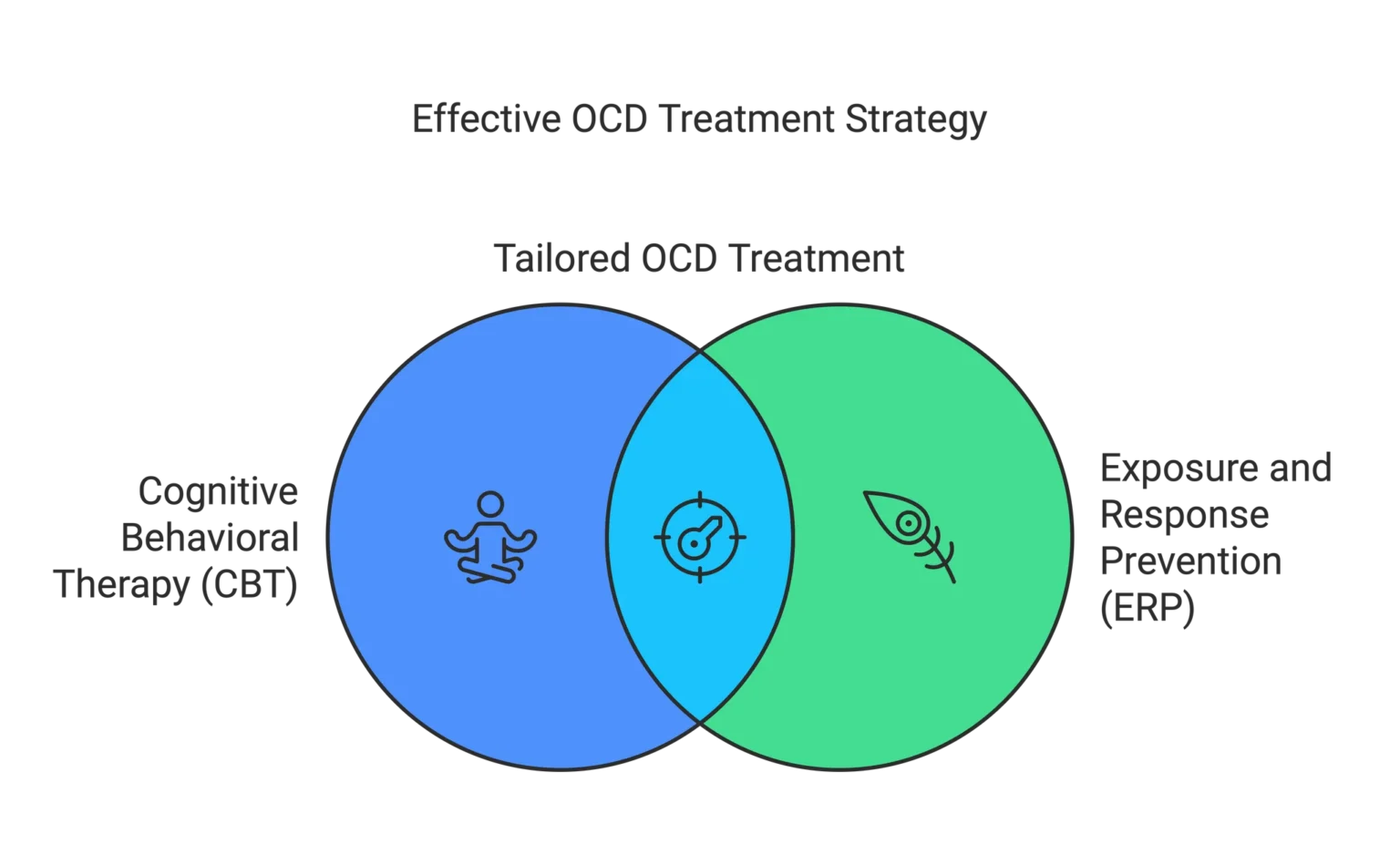
Do We Use Exposure and Response Prevention to Treat OCD?
Absolutely. ERP is at the core of my treatment for OCD. It’s a powerful, research-backed technique that helps children learn to tolerate anxiety without relying on compulsions to feel better. Over the years, I’ve guided countless children and teens through ERP, supporting them as they gain confidence in their ability to manage their OCD and live freer, more fulfilling lives.
Do We Include Families in Any of the Treatment?
Yes, family involvement is a cornerstone of our approach to treating OCD. We understand that OCD can affect the entire family, and we work closely with parents and siblings to create a supportive home environment. Parents learn strategies to respond to compulsions without reinforcing them, and we discuss how to manage reassurance-seeking behaviors or other challenges. Sometimes, family members are directly involved in ERP exercises to help the child feel supported. By including families, we create a team approach that fosters progress and strengthens relationships.
How is Eden Behavioral Health Unique in Treating Child OCD?
At Eden Behavioral Health, our approach to treating OCD stands out because of our commitment to personalized care, family involvement, and using the latest evidence-based methods:
Specialization in ERP: Our therapists are highly trained in exposure and response prevention, ensuring that children receive the most effective treatment for OCD. We tailor ERP techniques to each child’s specific obsessions and compulsions, creating step-by-step plans that build confidence and resilience.
Family-Centered Approach: We recognize the critical role families play in a child’s treatment. Parents are provided with training and tools to respond to OCD behaviors in ways that reduce anxiety and encourage long-term progress. This collaborative approach ensures consistency between therapy sessions and home life.
Comprehensive Care: In addition to ERP, we offer supportive therapies like parent-child interaction therapy (PCIT) and cognitive-behavioral strategies to address co-occurring challenges like anxiety or perfectionism. We also work closely with schools and healthcare providers to create a seamless network of support.
Real-World Application: We take therapy beyond the office when necessary, conducting exposures in real-life settings where the child’s anxiety occurs, such as their school, home, or community spaces. This practical approach ensures children develop skills they can use in their everyday lives.
Flexible Treatment Options: Whether your child needs traditional weekly therapy or a more intensive program, we offer multiple levels of care to meet their needs.
By combining empathy, expertise, and proven strategies, Eden Behavioral Health helps children and their families move beyond the challenges of OCD toward a brighter, more confident future.
Choose Your Location to Get Started
Contact Us
Ready to support your child’s emotional health, confidence, and long-term well-being with a trusted child therapist and psychologist in Cook County? Contact us today to schedule an appointment!
Schedule a Consultation
Contact Us
Ready to support your child’s emotional health, confidence, and long-term well-being with a trusted child therapist and psychologist in Cook County? Contact us today to schedule an appointment!